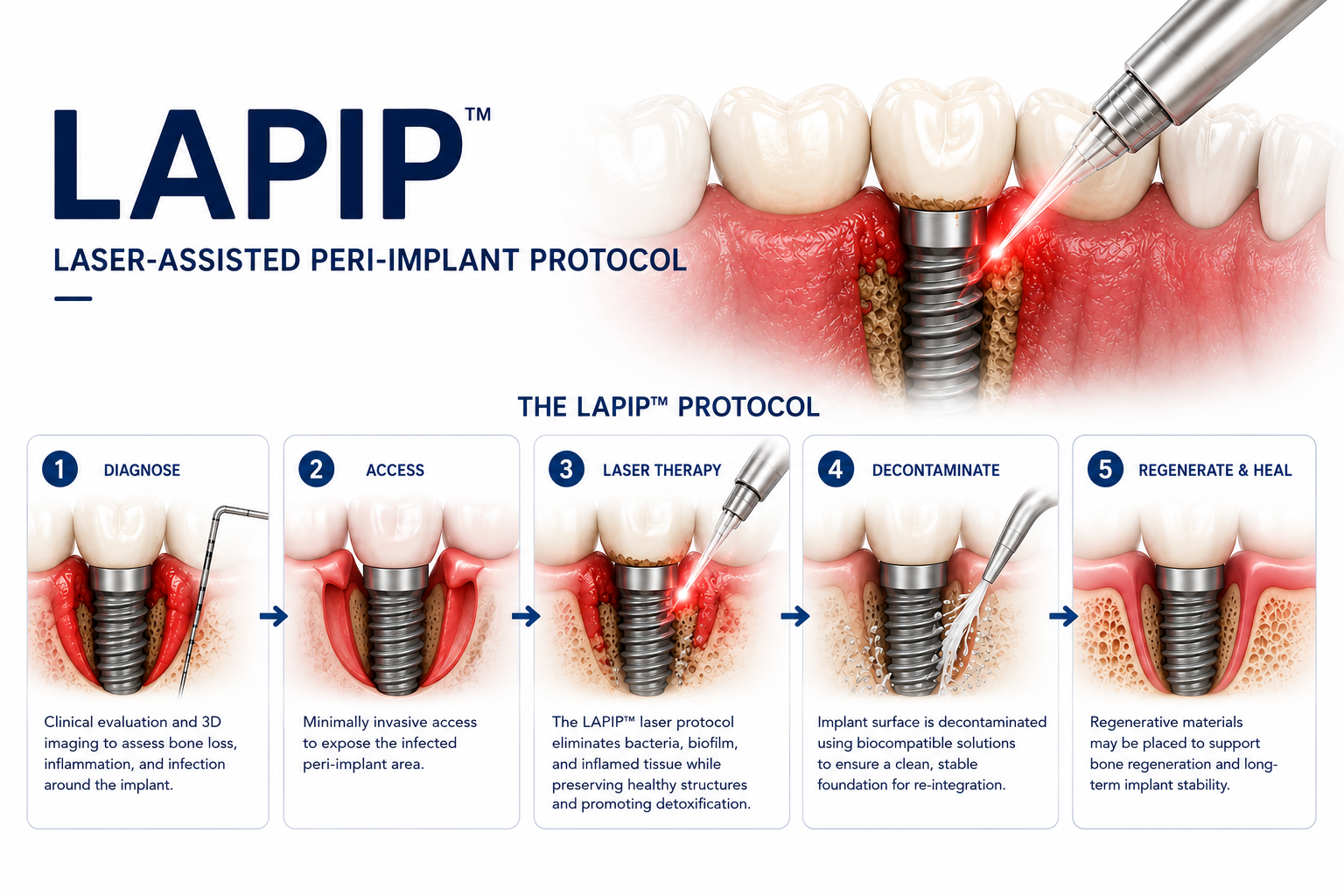
LAPIP™ (Laser-Assisted Peri-Implantitis Procedure) is an FDA-approved failing dental implant treatment at Des Moines Dental Center that doesn’t require cutting or stitches.
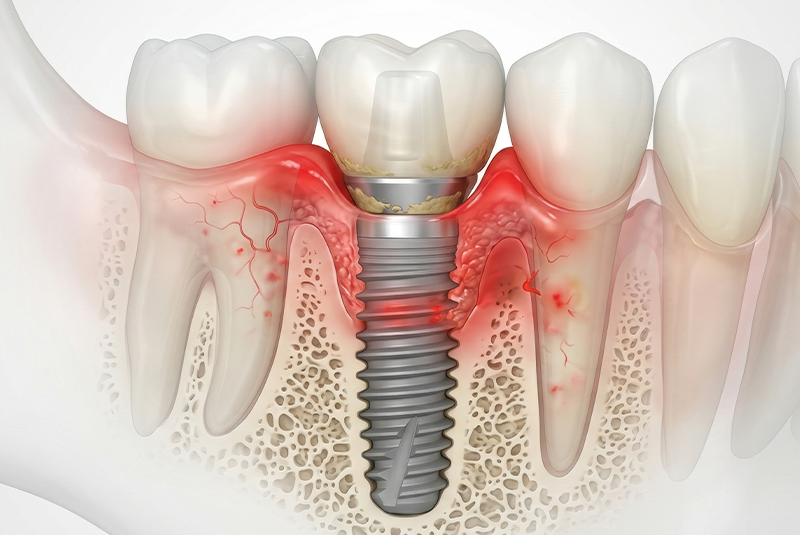
This advanced procedure targets the bacterial infection responsible for inflammation and bone loss around implants. The laser removes diseased tissue, eliminates harmful bacteria, and stimulates your body’s natural healing response to encourage bone regeneration and save a failing dental implant.
LAPIP treatment in Des Moines, WA, is a minimally invasive alternative to traditional implant revision surgery that uses the PerioLase® MVP-7™ dental laser.
Because LAPIP is gentler on surrounding tissue, you can expect less discomfort, faster recovery, and minimal downtime after treatment. Studies show that 94% of failing implants treated with the LAPIP protocol reintegrate in the pockets, while leaving healthy tissue intact.
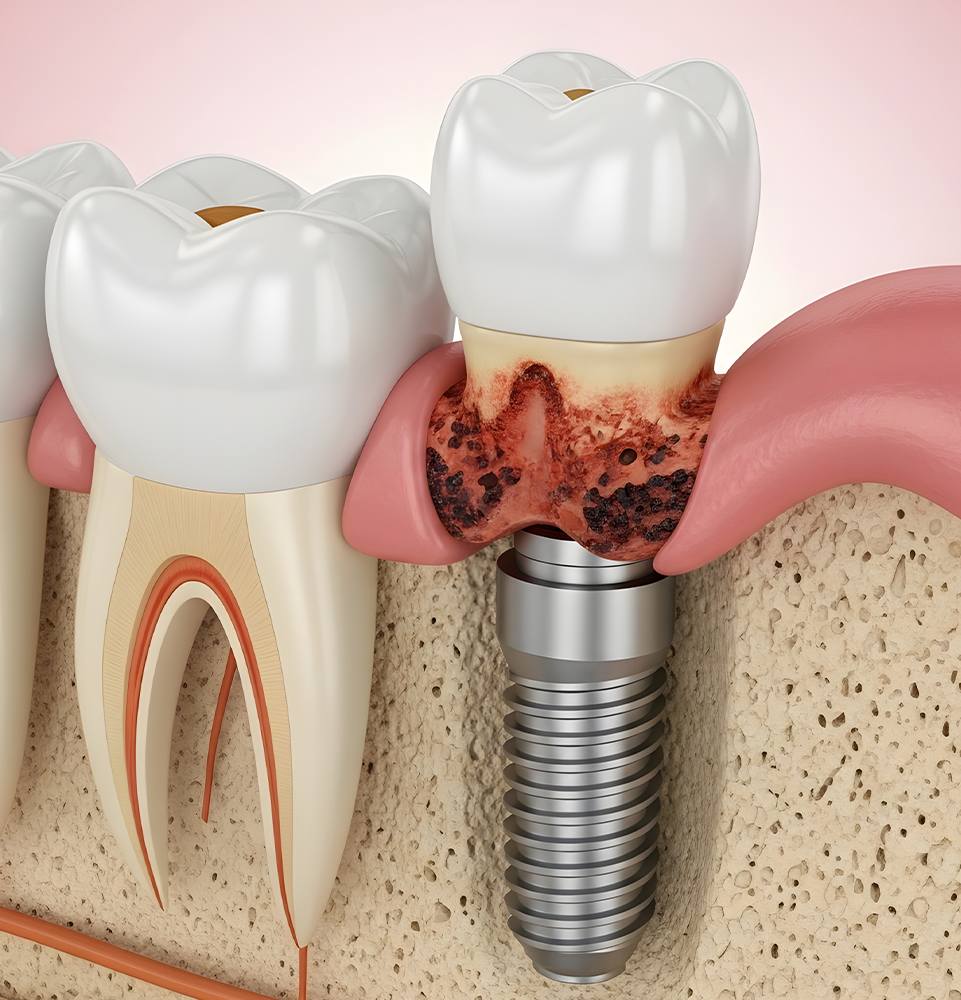
While some discomfort after dental implant surgery is normal during the first few weeks, pain that persists or worsens signals a problem. In addition to bleeding or swollen gums, you may notice discomfort when chewing, increased sensitivity, or even slight implant movement as supporting bone deteriorates.
Although dental implants are highly successful and long-lasting, factors such as poor oral hygiene, smoking, certain medical conditions, and excessive bite pressure can increase the risk of peri-implantitis.
This advanced inflammatory infection is similar to gum disease; however, it can progress more rapidly around dental implants than natural teeth. Early treatment at Des Moines Dental Center is important because symptoms of peri-implantitis can worsen over time and eventually lead to implant failure.
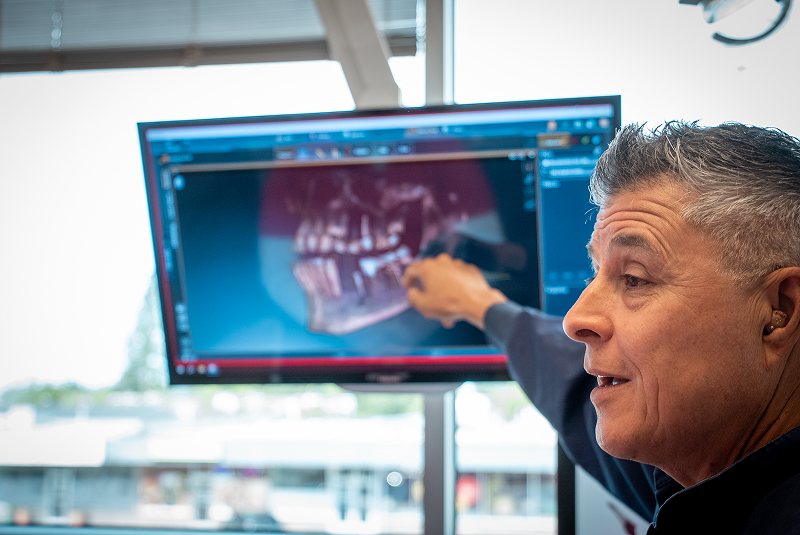
Our implant dentist, Dr. Benjamin Dorantes, assesses the bacteria contributing to the infection to determine the severity and the best treatment approach. The ultrathin laser fiber is placed gently between your gums and the implant to remove infected tissue, kill bacteria, and create a clean environment.
Specialized ultrasonic tips are used to remove debris from the implant surface, thereby improving tissue reattachment. The laser is used to form a stable fibrin blood clot containing stem cells from your bone, thereby creating a closed system that encourages natural healing.